Materials say nothing. We make them talk.
Advanced non-destructive testing, metallurgical analysis and engineered composite repair — for power, oil & gas, petrochemical and fertilizer plants across the MENA region.
WHO WE ARE
UPRISE LTD is a provider for engineering services such as inspection and QA/QC, we aspire to offer services with highest quality at a competitive pricing.
To provide innovative integrity solutions for power, fertilizers, oil, gas and petrochemicals sectors.
To uprise from MENA region markets to world markets.
Quality in everything we do, from planning to achieving results.
Our Services
Advanced NDT
LRUT, MRUT, GPR, EMAT, SRUT, MFL tank floor mapping, PEC, PAUT, tube inspection, and Replica Test — a capability we have delivered for over 10 years.
Conventional NDT
Visual, ultrasonic, radiographic, magnetic particle and dye penetrant testing.
Material Supply
Sourcing and supply of certified inspection materials and consumables.
Manpower Supply
Certified inspectors and technical crews, mobilised to your site.
3rd party inspection
Independent vendor inspection and QA/QC witnessing.
Cold Repair using CFRP
Engineered carbon-fibre composite repair for pipelines, piping and tanks — no hot work, no shutdown.
Water Jet Cleaning
High-pressure and ultra-high-pressure jetting that strips scale, sludge and residue — no chemicals, no heat, no metal damage.
Wet Blasting
Blast cleaning with minimal airborne dust — surface profile for coatings, safer near live plant.
Rope Access Services
IRATA-style rope access for inspection in hard-to-reach areas.
Replica Test
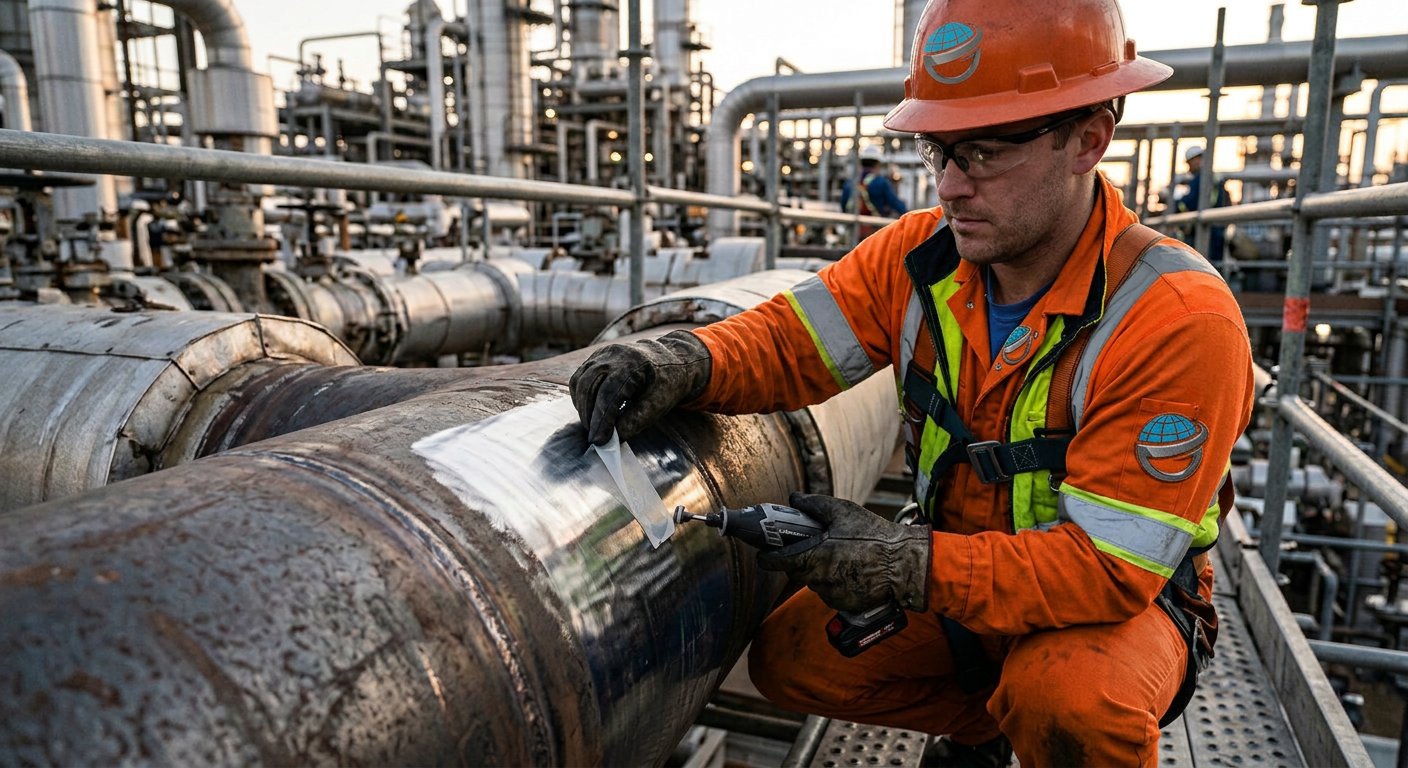
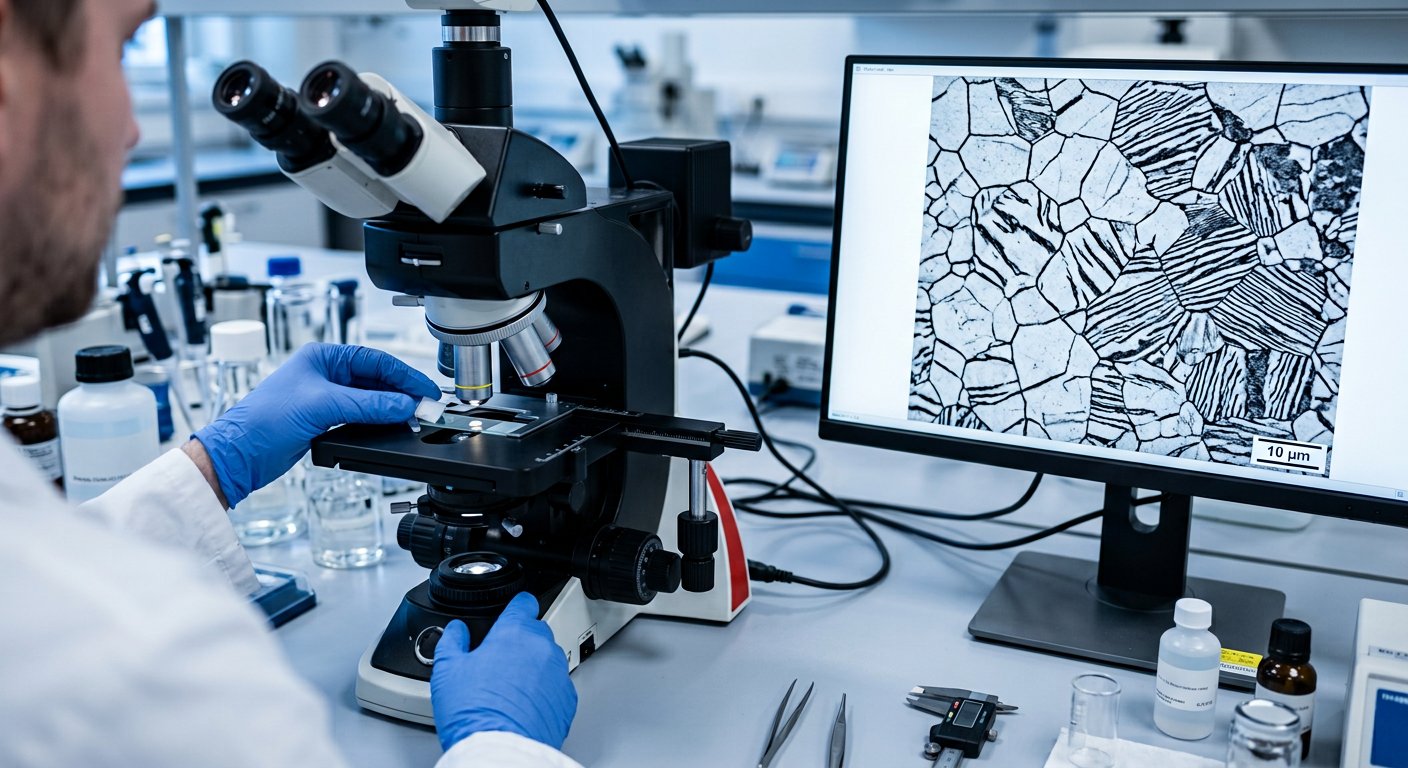
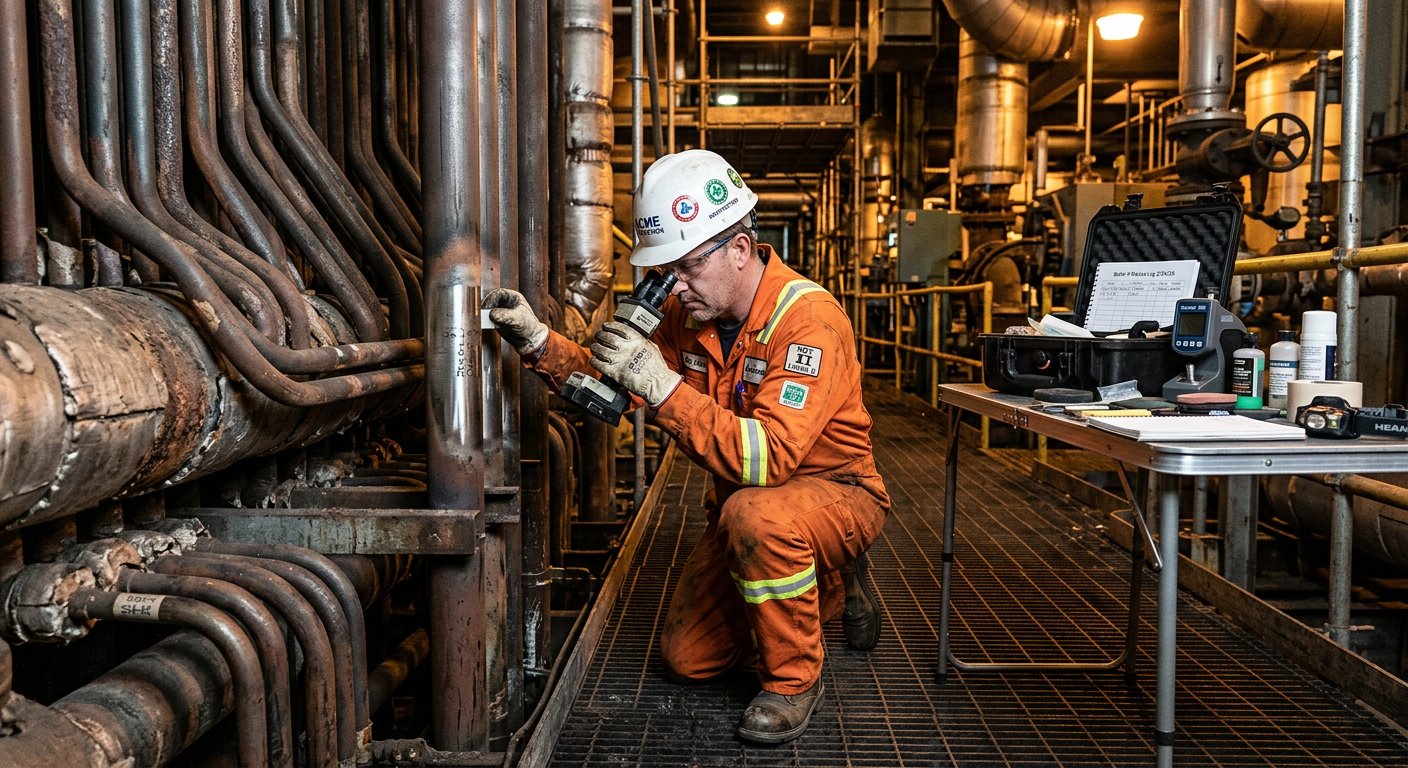
Replica testing is a non-destructive, on-site metallographic technique that shows what is happening inside your steel — without cutting a single component. UPRISE has been delivering this service in the field for more than ten years, across power, oil and gas, petrochemical and fertilizer plants.
We prepare the surface in place, lift a high-fidelity acetate replica, and have it interpreted and reported by metallurgical professors holding PhDs — detecting creep, spheroidisation, graphitisation, hydrogen damage and thermal ageing long before they become failures.
Typical applications include superheater and reheater tubes, headers, steam lines, reformer and furnace tubes, and refinery piping across carbon steel, Cr-Mo and stainless alloys — on live plant, at height, or in confined spaces.
Why it matters
- Fully non-destructive — no cut-outs, no weld repairs, no downtime
- Detects damage before it becomes visible — early-stage creep and embrittlement
- Remaining-life assessment — real data for run / repair / replace decisions
- Works on live plant — flanges and curved surfaces, at height or in situ
- Permanent record — photomicrographs archived for future fitness-for-service reviews
Our scope & deliverables
- In-situ surface preparation — grinding and polishing to a mirror finish
- Controlled etching and acetate replica tape extraction
- Optical microscopy, with SEM support where required
- Microstructure and degradation-mechanism interpretation
- Interpreted and reported by metallurgical professors (PhD)
- Correlated hardness testing to support the findings
3D Replicating System (RepliSet)
Alongside conventional acetate tape replication, we deploy the RepliSet 3D replicating system — a two-component silicone applied directly to the component with a dispensing gun. It cures in place within minutes to produce a high-resolution three-dimensional negative of the surface, reproducing detail down to a fraction of a micron.
- Sub-micron surface detail — far finer reproduction than tape alone
- Ideal for awkward geometry — curved, vertical and overhead surfaces where tape is hard to seat
- Cures on the component — in minutes, with no heat and no damage to the surface
- Permanent, archive-ready record — examined by optical microscope, SEM, or 3D scanned
- Crack and defect measurement — captures crack opening, weld caps and corrosion topography
Cold Repair using CFRP
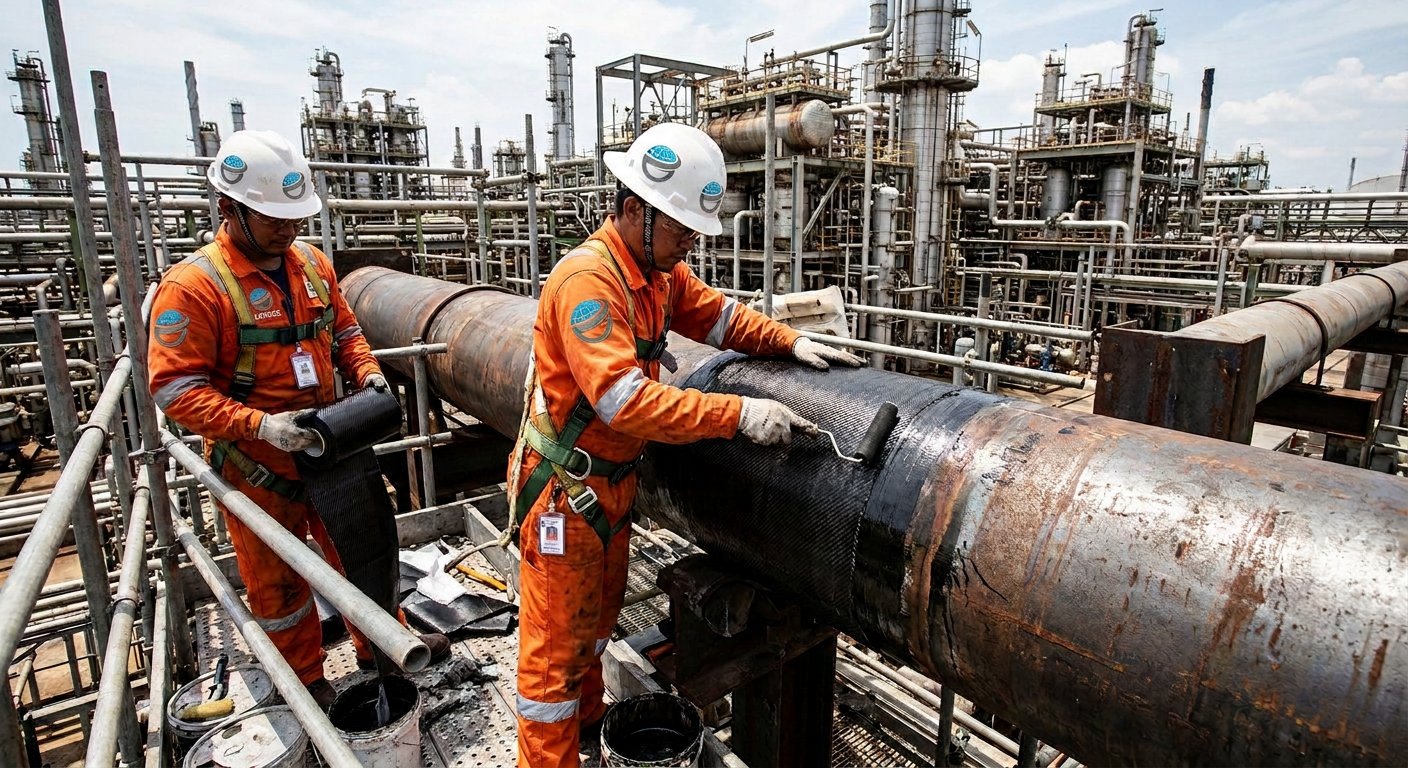
A permanent, engineered repair for corroded, eroded, dented or mechanically damaged pipelines, piping, risers and storage tanks — using carbon-fibre reinforced polymer (CFRP) wraps. No welding, no hot work permit, and no production shutdown.
The wrap reinstates the pressure-containing capability of the asset and restores a corrosion barrier over the repair. Every repair is designed, qualified and documented to international composite-repair standards, so it stands up to the same technical scrutiny as a welded replacement.
What we deliver
- Defect assessment — remaining wall-thickness and strength analysis
- Composite design — laminate thickness and orientation calculation
- Surface preparation — abrasive blast or mechanical preparation to specification
- Filler and wrap application — anisotropic layup by trained applicators
- Curing and QA — ambient or elevated-temperature cure with full records
- Post-repair inspection — hardness, visual, thickness and documentation
Where it applies
- Onshore and offshore transmission pipelines
- Process piping, elbows, tees and reducers
- Risers, spools and structural members
- Storage-tank shells and floors
- Locations where hot work is prohibited or impractical
- Live repairs at operating temperature and pressure
Water Jet Cleaning
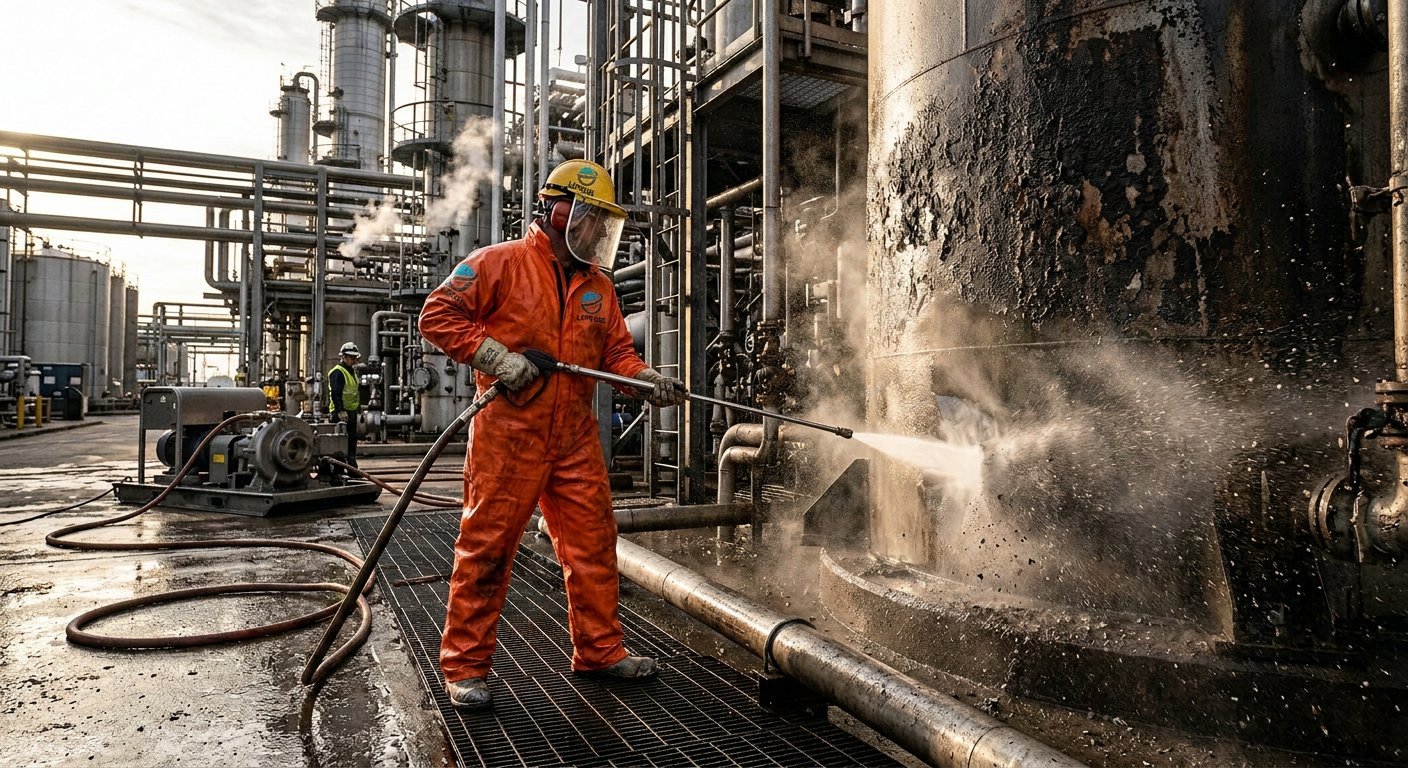
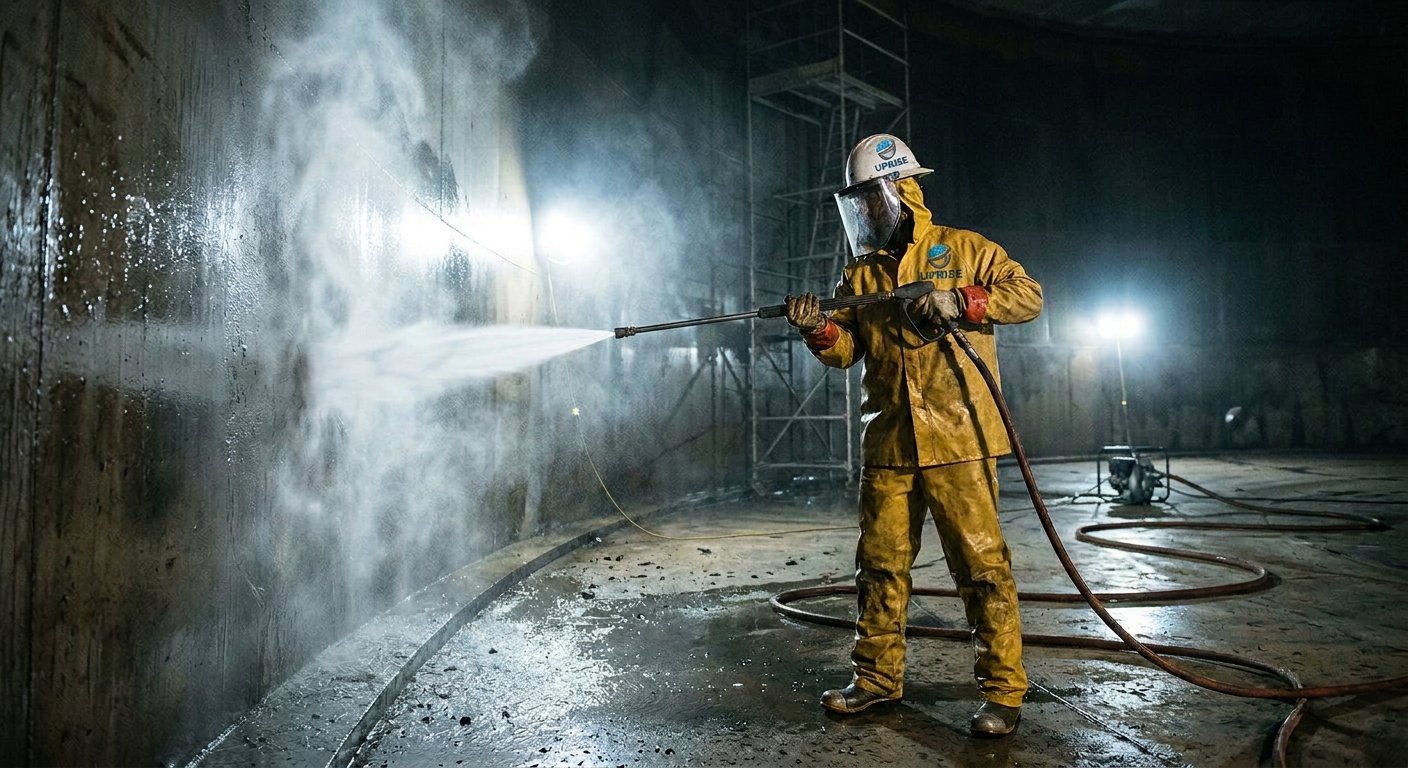
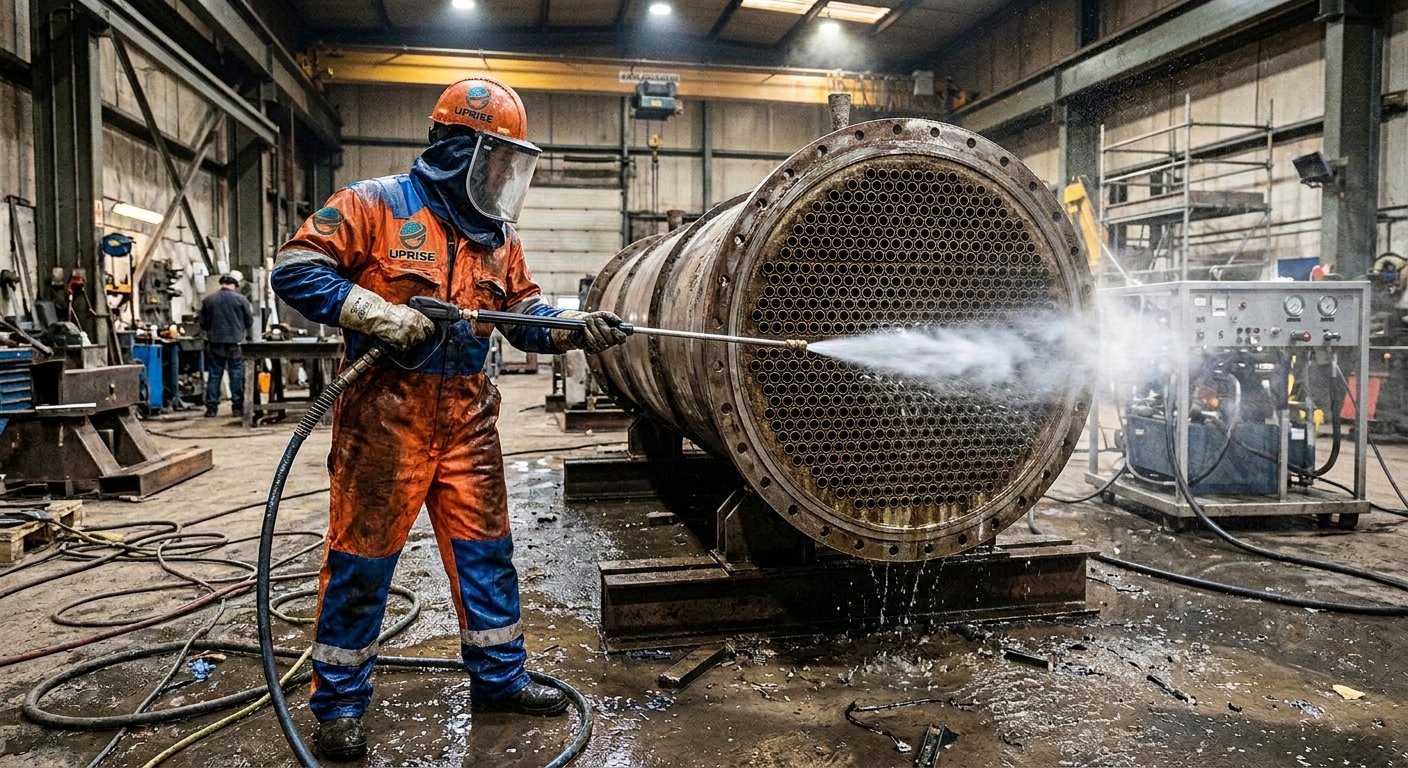
High-pressure and ultra-high-pressure water jetting strips away scale, sludge, hydrocarbons, product residue and refractory — without chemicals, without heat, and without damaging the parent metal.
It is the fastest route to a clean, inspection-ready surface. A tank, vessel or heat exchanger that has been properly jetted can be entered, inspected and repaired immediately, instead of waiting on chemical cleaning cycles or manual scraping.
We work to the pressures and flow rates your deposit actually needs — from general wash-down through to ultra-high-pressure cutting and surface preparation.
Where we apply it
- Storage tanks — floors, shells and roofs, ready for inspection
- Heat exchangers — tube bundles, tube sheets and shells
- Process vessels and columns — internals, trays and packing
- Pipelines and spools — descaling, deposit and product removal
- Refractory and coatings — hydro-demolition and coating removal
- Pre-inspection cleaning — so NDT readings reflect real wall thickness
Why clients choose it
- No chemicals — no effluent treatment or disposal headache
- No hot work — no permit, no ignition risk in hydrocarbon service
- No metal damage — unlike grit blasting or mechanical scraping
- Confined-space capable — remote and automated tooling available
- Cuts turnaround time — cleaning and inspection back to back
- Faster, safer NDT — accurate thickness readings on a genuinely clean surface
Wet Blasting
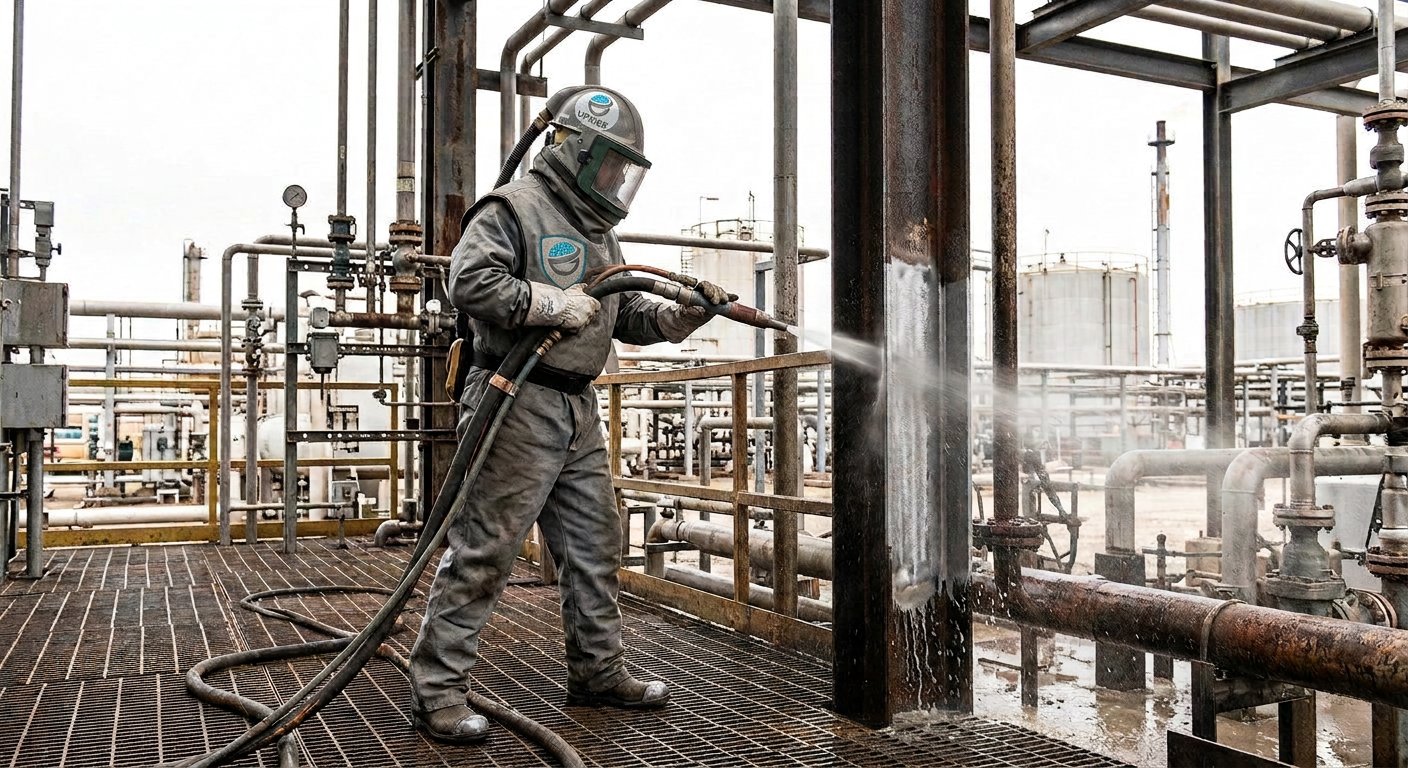
Blast cleaning without the dust
Wet blasting injects water into the abrasive stream, so you get the cleaning power and surface profile of conventional grit blasting with a fraction of the airborne dust.
- Dramatically less dust — safer for your people and the surrounding area
- Surface profile for coating — prepares steel to the profile coatings require
- Contaminant removal — salts, oil and soluble deposits held in the water, not airborne
- Ideal for live plants — work close to operating equipment and instruments
- Approved for hazardous areas — reduced spark and static risk
- Better finish — no dry-blast dust settling back onto the prepared surface
Our Clients
Working across Egypt's oil & gas, refining, fertilizer and petrochemical industries — on live plant, at height, and in confined spaces.
Oil & Gas
15 clients


Fertilizers & Petrochemicals
8 clients